Research
The first full assembly walkthrough logged 14 problems, and every one of them changed the design.
Most building systems declare themselves easy to assemble. Kult treats buildability as an engineering property with a hard limit (no part over 30 kg), a defined acceptance test (a novice pair, instructions only, no verbal help), and a feedback loop that has already run once. On 2026-07-10 the founder walked the complete instruction sequence for a generated house and recorded 14 numbered problems. Problems were expected. The result worth reporting is that within two days each of the 14 had become a tracked design change, and several had already shipped.
Finding
Lay-builder assembly at Kult rests on three mechanisms, all verifiable in the repository rather than asserted in marketing. First, a hard part-weight cap of 30 kg, enforced as a parametric check in the engine: any generated part over the cap is rejected at design time, so the constraint holds for every house the software will ever emit rather than only for the showcase one. Second, a poka-yoke stack that moves error-proofing from the instructions into the parts themselves: engraved part codes, an engraved TRANSOM mark that distinguishes otherwise identical boards, and CNC-cut screw-position dishes that make a missed screw visible and countable. Third, an assembly test loop whose first iteration ran on 2026-07-10 and produced measurable design change. The instruction sequence being tested is itself machine-derived from the verified assembly order, so each step corresponds to a part the geometry checks have proven insertable at that point.
Method
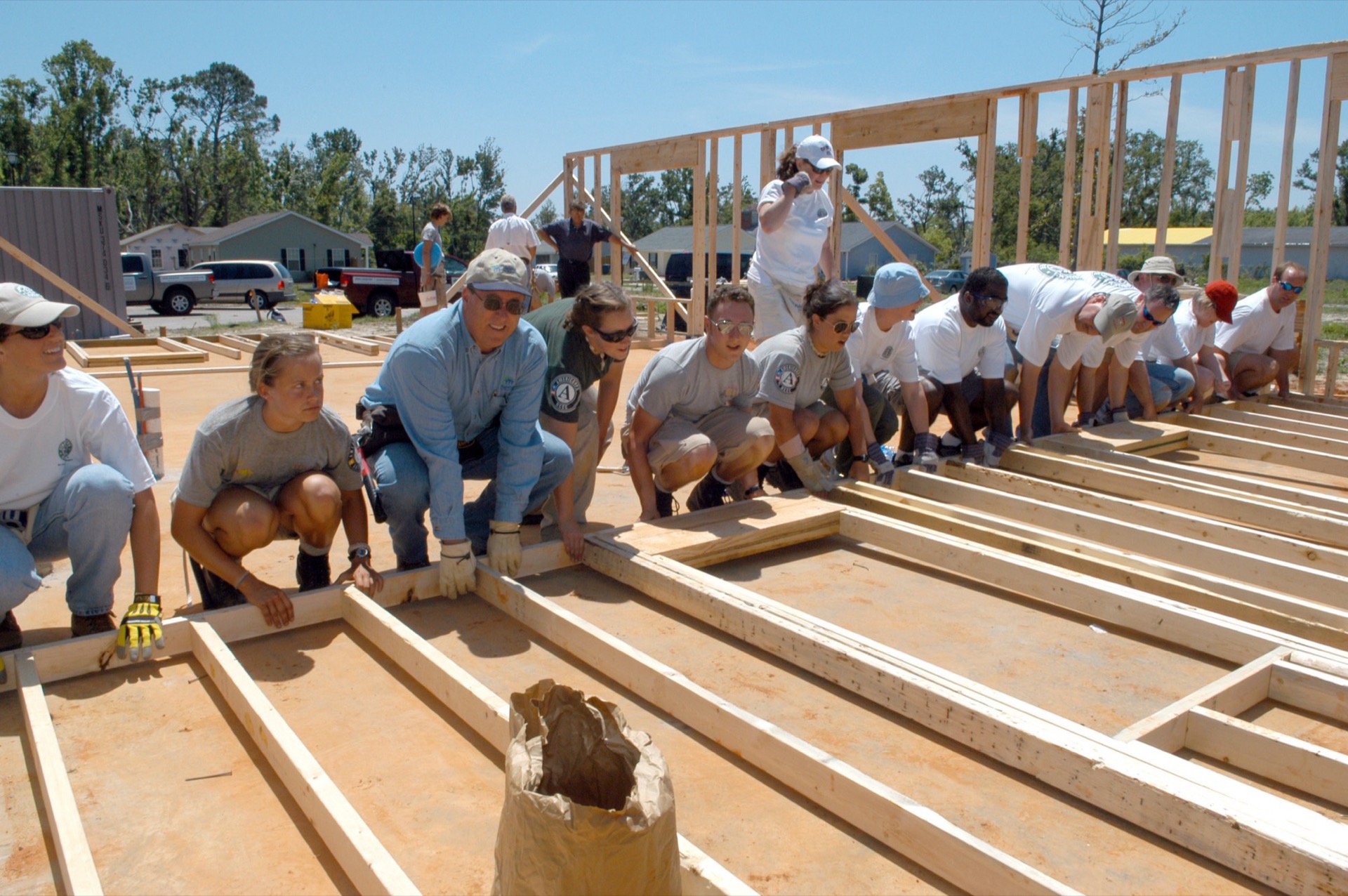
The weight cap. The 30 kg two-person handling cap was derived from published ergonomics before it became a design rule: the single-person low-risk ceiling is about 25 kg at knuckle height and collapses to roughly 10 kg at shoulder height (HSE INDG143); the NIOSH lifting equation assigns zero safe capacity above 175 cm; and a two-person team lifts about two thirds of the sum of its individuals rather than double one of them. A sheathed full-height wall weighs on the order of 115 kg, which is why Kult walls are assembled from parts each person can carry, built lying flat, and raised as a unit with a mechanical aid that ships as part of the product.
The acceptance test. The pass criterion is written into the MVP definition: a novice pair assembles everything under the cap from the instructions alone, with no verbal help; raising steps use the shipped aid. An irreversible or structural mistake fails the run outright. A recoverable hesitation is logged as an instruction or geometry bug and fed back. The test is staged across the physical prototype ladder, from model scale to a full build.
The 2026-07-10 walkthrough. The founder ran the complete step-by-step instruction sequence for a generated house in the build player and recorded every point of confusion verbatim, from "these are state descriptions, not instructions" to a step where twelve sheathing parts were announced but nothing visibly changed. The 14 observations were triaged the same day into three streams (player UX, instruction content and physical process, part semantics) as 14 tracked tickets. The wording problems were then grounded in an explicit instruction doctrine drawing on minimalism research, procedural-writing practice and the ASD-STE100 controlled-language standard used in aircraft maintenance: verb first, one action per step, sentences under roughly 20 words, one term per concept, and every checkpoint stating its consequence in plain language.
Numbers
| Item | Value |
|---|---|
| Part-weight cap, enforced in the engine | ≤ 30 kg per part (single cap, decided 2026-07-02) |
| Ergonomic basis | 25 kg single-person knuckle-height ceiling; ~10 kg at shoulder; team lift ≈ 0.66 × sum (HSE, NIOSH/CCOHS) |
| Walkthrough observations, 2026-07-10 | 14 numbered problems, recorded verbatim |
| Design changes created from them | 14 tracked tickets across 3 work streams, triaged same day |
| Already shipped (as of 2026-07-11) | lay-flat wall build shown flat in the player with an animated raise; screw-position dishes with contrast ring cut by the CNC; progressive-tightening doctrine (loose fit first, one final torque pass) |
| Instruction-quality evidence | validated cognitive design principles cut assembly time ~35 % and errors ~50 % in controlled testing (Stanford, 2004) |
| Novice-build precedent | Segal-method houses built by council-list families after ~2 days of training; WikiHouse shells raised in 1–2 weeks by crews of 4–6 without carpentry qualifications |
| Build unit | a cohort of 6–12 families plus a shipped mechanical raising aid, the pattern of the only novice-completion model proven at scale (USDA mutual self-help) |
Assumptions: the ergonomic ceilings are guidance values for a population and say nothing about an individual builder. The 35 %/50 % instruction figures are from furniture-scale assembly experiments; building-scale transfer is plausible but unproven. The Segal and WikiHouse timelines are for structural shells; both precedents took far longer to reach a finished home, which is exactly why Kult's labour budget covers the whole house rather than quoting shell time.
What this does not show
- No Kult house has yet been assembled by a novice. The 2026-07-10 walkthrough exercised the full instruction sequence on screen, in the build player, on a single experienced tester. The physical acceptance test, a novice pair with no verbal help, runs on the staged prototype ladder and has not happened yet.
- One tester is not a sample. The 14 observations are treated as a fault catalogue rather than a completion statistic; nothing here estimates how long a real family takes or how often they succeed.
- Several of the 14 fixes are still open. Among them: how insulation is fastened is not yet explained in the sequence, and multi-part steps where a stud arrives with holes for a later part need re-partitioning into separate parts and steps.
- The labour-hour target (roughly 120 + 16 person-hours per m², set at 80 % of the best-documented realistic figure) is a calibration hypothesis rather than a measured result, stated so the first instrumented builds can falsify it.
Sources
- Kult internal record, founder assembly walkthrough (2026-07-10) — 14 numbered observations, verbatim, with same-day triage into tracked design changes.
- Kult internal doctrine, instruction wording (2026-07-10) — verb-first procedural rules per ASD-STE100 controlled language, minimalism (Carroll), and technical-writing practice.
- Kult foundation documents — the ≤30 kg part cap (single-cap decision 2026-07-02) and the IKEA acceptance test as an MVP pass criterion.
- Kult internal research, "Pillar 2 — self-build behaviour & instruction design" (2026-07-01, addenda 2026-07-02 and 2026-07-05) — evidence base and the progressive-tightening and one-caller-lift doctrines.
- Heiser, Phan, Agrawala, Tversky, Hanrahan (2004), Cognitive Design Principles for Assembly Instructions, Stanford — PDF
- HSE INDG143, manual-handling guidance — hse.gov.uk; CCOHS on the NIOSH lifting equation and team handling — ccohs.ca
- Walter Segal Self Build Trust, Walters Way case studies — segalselfbuild.co.uk; WikiHouse assembly guidance — wikihouse.cc/guides
- RCAC, USDA Mutual Self-Help Housing programme — rcac.org
Read next
Fit and assembly order verified before cutting
The geometric checks that prove every step in the instruction sequence is physically possible.
Five prototypes, each with a kill criterion
The physical proof ladder where the novice acceptance test actually runs.
All papers
The research hub collects every published paper, and the note on why the work is open.